
Your mum rings on a Sunday afternoon. You're halfway through something, so you watch the phone buzz itself out on the kitchen counter and tell yourself you'll ring her back. Probably Tuesday.
Nothing about that moment feels important. There'll be another call next Sunday, and the one after that. There always has been.
Back in 2015, the writer Tim Urban did something slightly uncomfortable with that feeling. He counted. In an essay called The Tail End, he worked out how much time he really had left with the people he loved.
Let's do the same sum for you.
Ninety years on one page
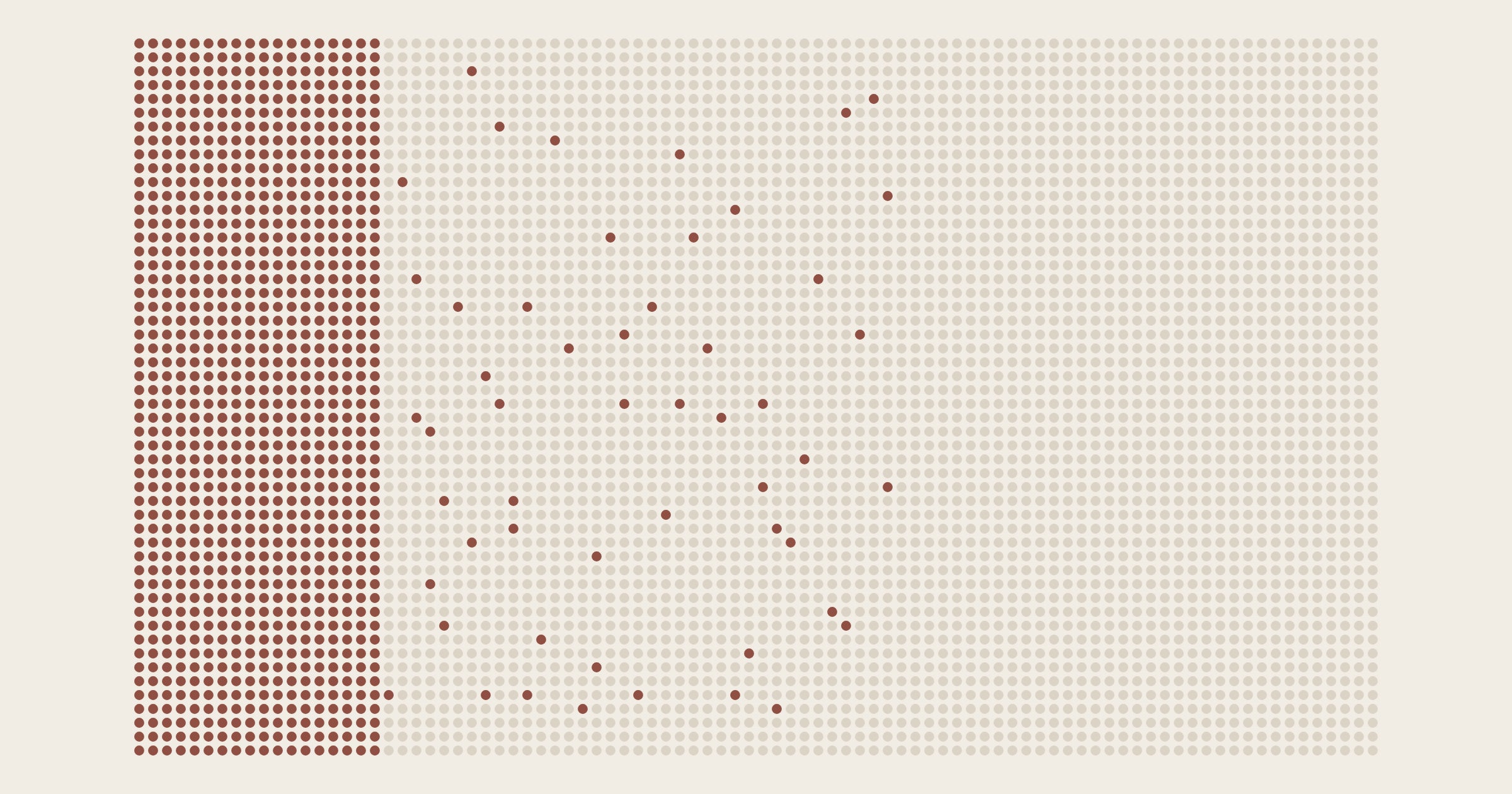
A long life feels like it should be enormous. Say you're lucky and get ninety years. Here's what that looks like when you draw every single week as a dot.
Already lived, age 35
Still to come
Look at all that grey. Most people feel a little relieved. Plenty of time left.
But the grid only counts your weeks. It has nothing to say about who you spend them with. Most will go on work, sleep and the washing up, and the ones you spend with your parents add up to a much smaller number than you'd think.
Where the time with your parents went
For your first eighteen years, you never had to plan to see your parents. They came with every ordinary day: at breakfast, in the driver's seat on the way to school, on the other side of every argument about your bedroom. Add it all up and it comes to something like 6,500 days under the same roof, and you weren't counting a single one.
Then you left, which is exactly what you were supposed to do. University. A first job. A flat share in a city they think is far too expensive. Someone to build a life with, maybe kids of your own.
And somewhere along the way, your parents quietly turned into an occasion. Christmas. A birthday or two. The odd weekend when everyone's diaries line up. Call it ten days a year.
Here's what that does to the numbers.
Growing up
Visits from 18 to 35
The tail end
Most of the time you'll ever spend with your parents happens before you think to count it.
That pale sliver on the right is the tail end. Every remaining Christmas, every Sunday lunch, every lift from the station. It's about the width of a fingernail.
Count what's left in yours
Averages aren't much use here, so put in your own numbers. Your mum or dad's age, and how often you actually see them. Not how often you mean to.
120 visits
20 birthdays
20 Christmases
"Twenty Christmases" sounds like plenty. Twenty trees in a row looks like exactly what it is: a number you could count on your fingers and toes.
So, what do we do with this?
For most people, the first reaction to the tail end is a small lurch in the stomach, followed closely by guilt.
I'd gently suggest skipping the guilt. Guilt is a lot like that phone on the kitchen counter: much easier to let ring out than to pick up. What helps is the plain arithmetic underneath it. Once you can see the tail end, there are really only two things you can change: how often you see them, and what happens when you do.
-
See them a bit more
Not heroically more. If you see them six times a year, a seventh visit makes your tail end about 17% longer. A
phone call on the same evening every week sounds like nothing. Over ten years, it's more than five hundred
conversations.
6 a year120 visits
7 a year140 visits (+20)
Same parents, same twenty years. One extra visit a year. The hollow dots are the difference. - Spend the visits on them Most visits disappear into the drive, the weather and whether anyone's hungry. Next time, ask about their first job. The house they grew up in. The friend they lost touch with and still think about. Those stories are already there, waiting for someone to ask.
- Keep what they give you Jot it down on the train home, or record it on your phone if they're happy to be recorded. One day, their voice telling a story you'd half forgotten will be worth more than every photo on the fridge.
- Bring the grandchildren Your kids have their own tail end with their grandparents, and it's shorter than yours. Every visit you share counts for both of you.
If you've already lost them
Some people read this far with a different feeling, because their mum or dad has already gone. If that's you, none of this is a scorecard. The days you had still count, all six and a half thousand of them.
And the stories don't always disappear with the person. An aunt, an old family friend or a brother who remembers it all differently can often tell you more than you'd expect. It's never too late to ask someone.
The questions you'll wish you'd asked
Talk to anyone who's lost a parent and, sooner or later, you'll hear some version of the same sentence: I wish I'd asked.
Usually it's something small and specific. The kind of thing that never comes up, because there's always next Christmas.
When did you last ask your mum something you didn't already know the answer to? What was she like at twenty? What did your dad want to be, before he was busy being your dad?
So ring her back.
Today, rather than Tuesday.
Glad I Got To Ask is 80 questions for the conversations you keep meaning to have. Pull one out on your next visit and see where it goes.
See the cardsOriginal concept: Tim Urban, “The Tail End”, Wait But Why (2015). Life expectancy figures are rounded from the ONS National Life Tables for the UK. The illustrations use simplified examples and won't match anyone's exact situation.